Making the systems work together
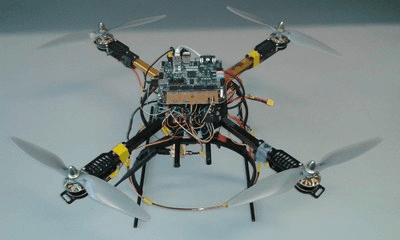
During the third year of my bachelor's degree in electrical engineering, I worked with a team of students to design, build, test, and improve an autonomous quadcopter over the course of an academic year. Starting with a provided frame and camera, we developed the electronics and algorithms needed to control the motors, keep the drone stable in flight, and bring the different hardware and software systems together.
The quadcopter was designed to navigate an indoor environment using its camera and QR codes placed on the floor. It could stream video wirelessly to a computer, locate electronic devices in the room, and deliver energy to them through inductive power transfer. That last requirement made it more than a flight-control exercise: the drone had to carry a power transmitter, approach its target accurately, and hover steadily enough for the charging link to work.
What the bench taught us
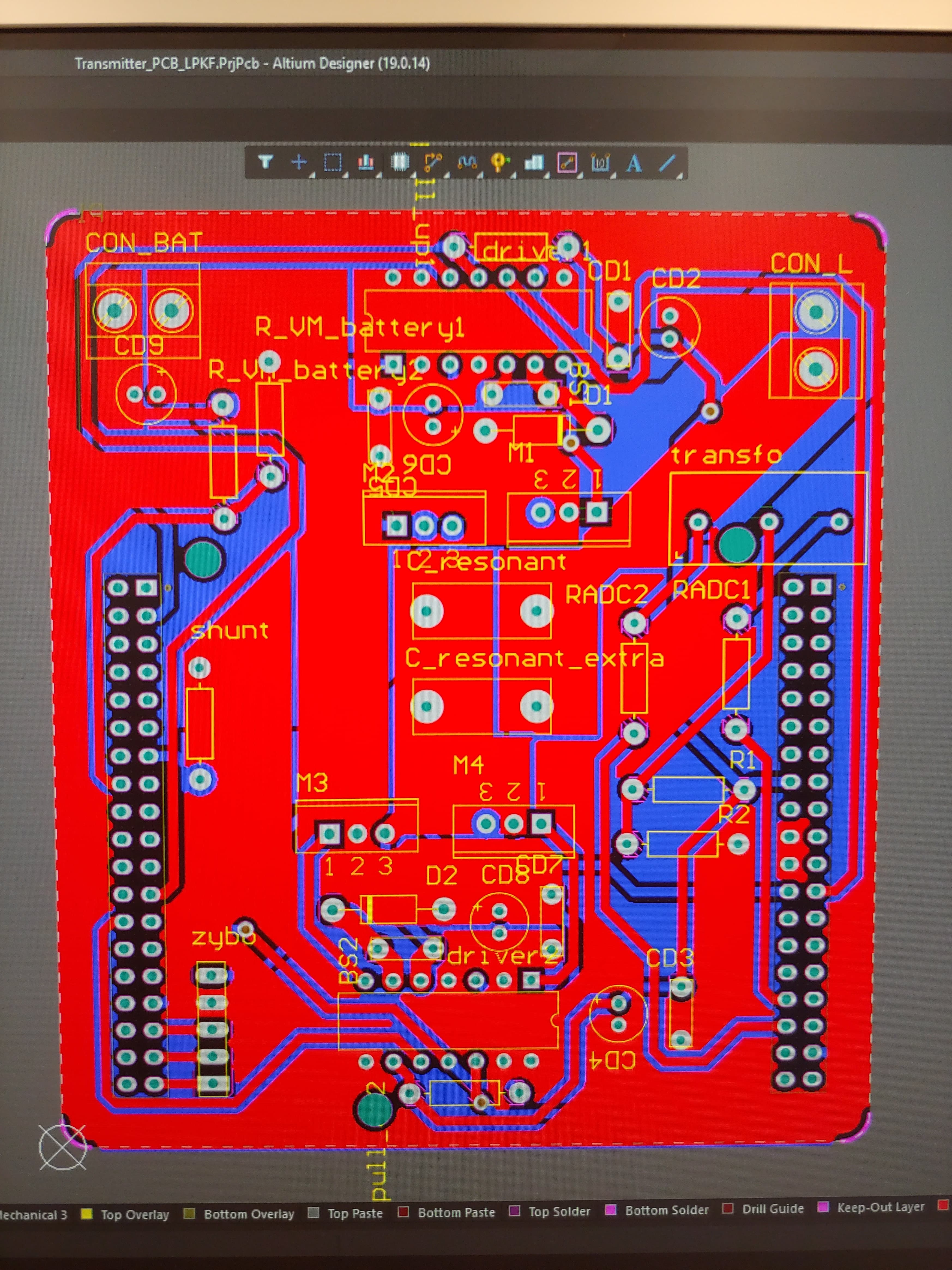
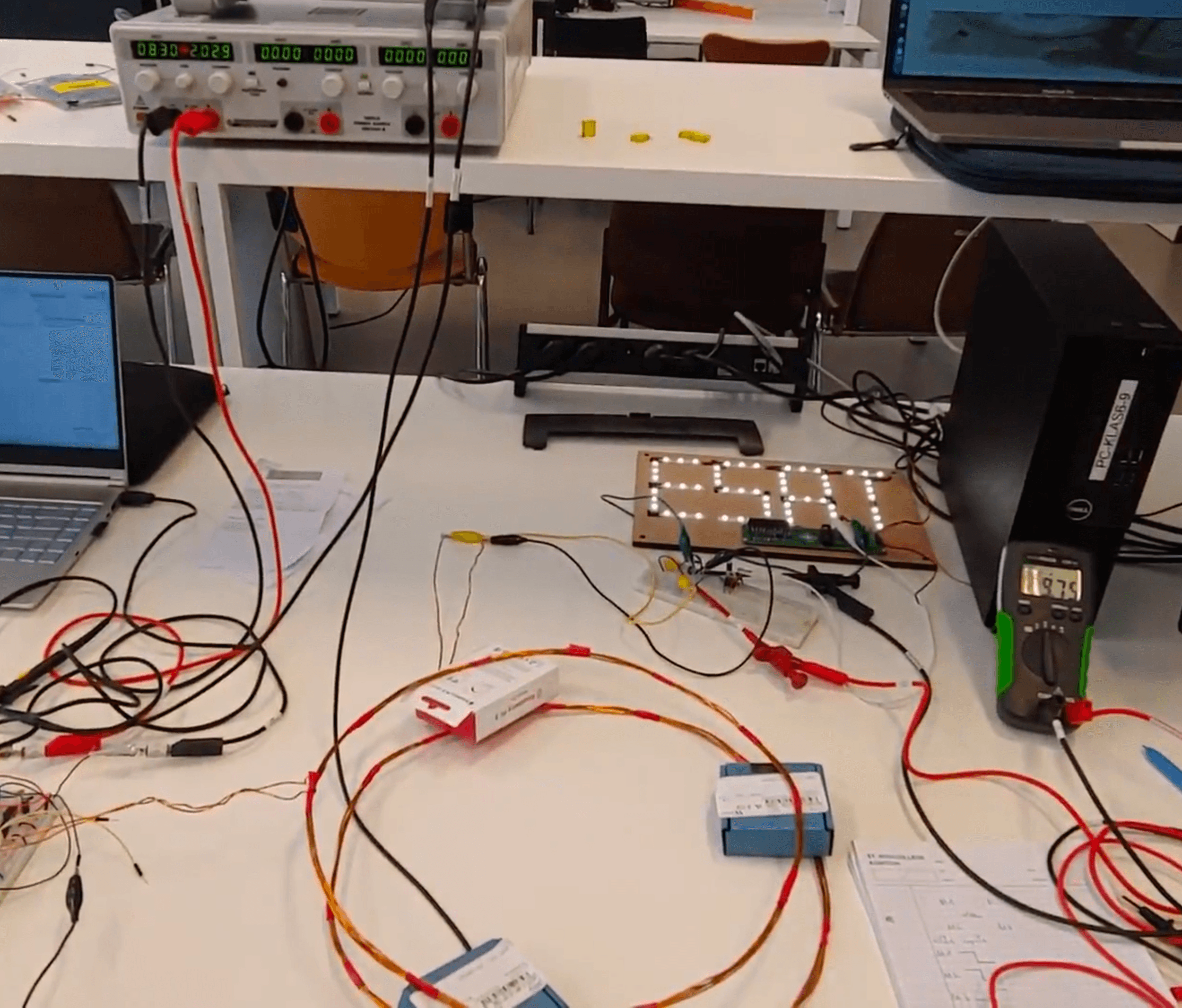
The wireless-power system moved from a transmitter PCB layout to a bench prototype built around a large copper loop. Testing meant tuning the resonant circuit, watching voltages and currents, and discovering how quickly a clean schematic turns into a table full of probes and cables. Integrating that hardware with the aircraft tied the project together: weight, power consumption, control, and navigation all became parts of the same engineering problem.