Measuring the spray
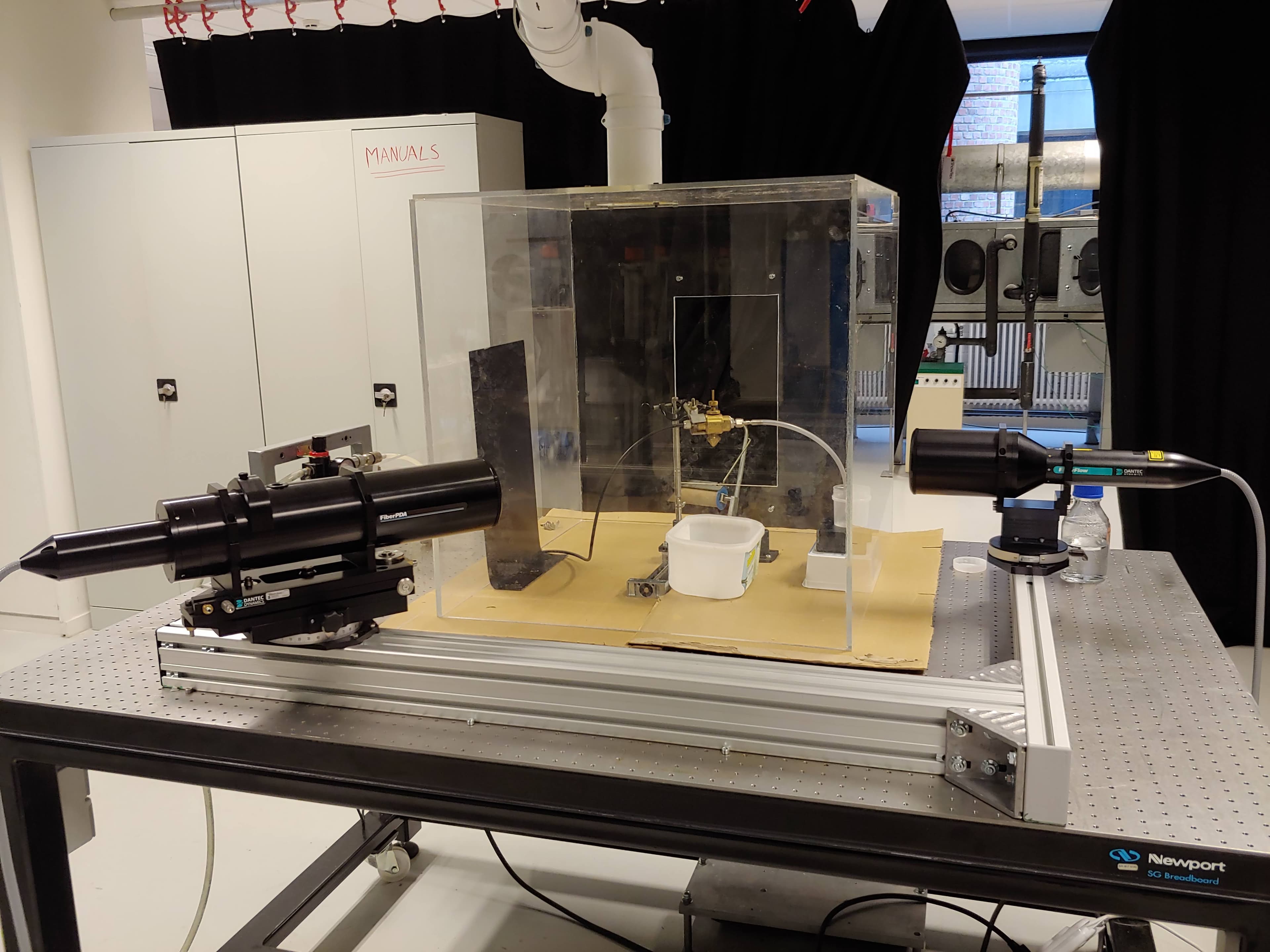
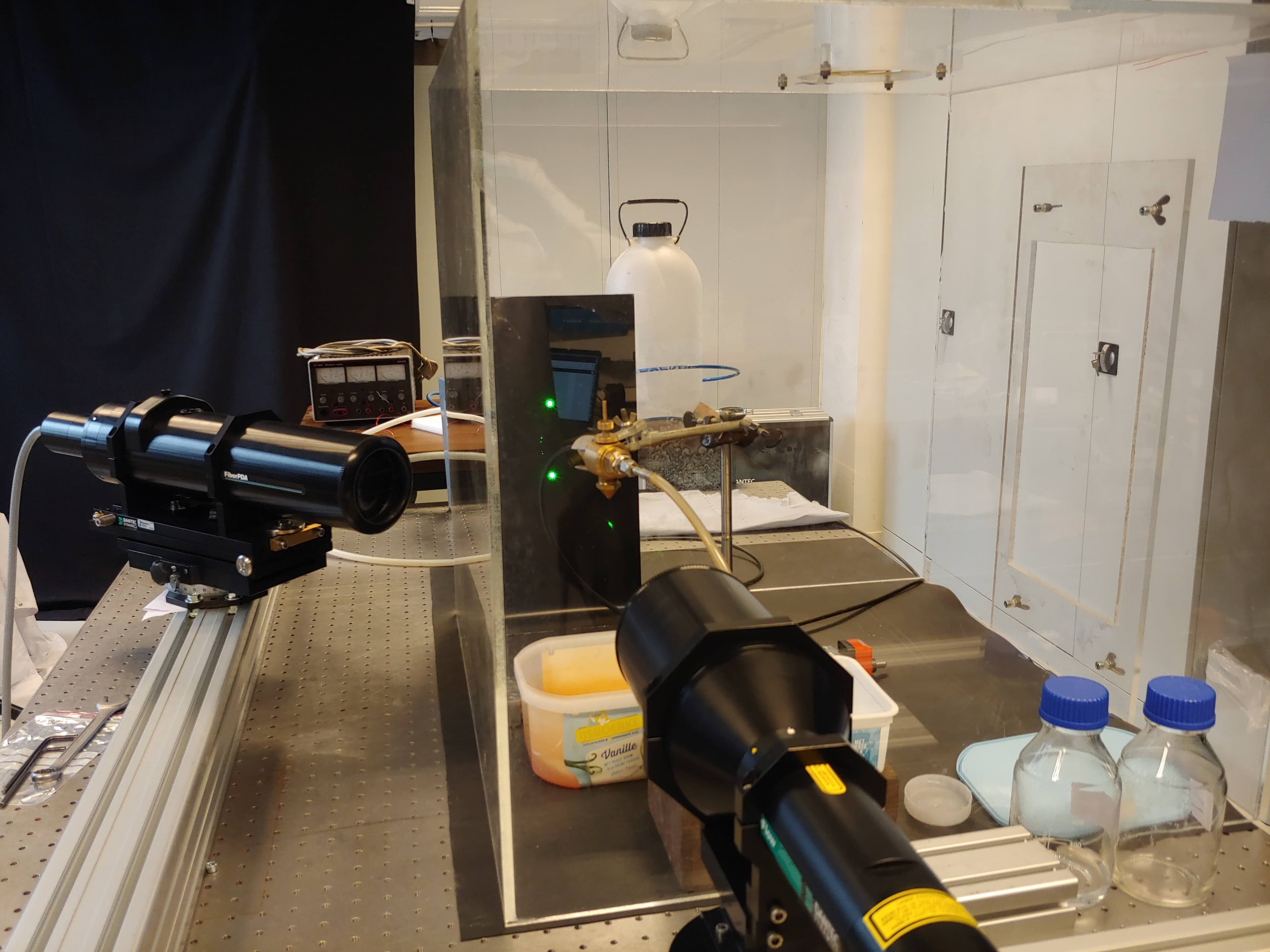
Spray cooling sounds simple: break a liquid into fine droplets and aim them at something hot. The experiment was a little less simple. We prepared water-based nanofluids with several low concentrations of TiO₂ particles, sent them through an industrial full-cone pneumatic nozzle, and measured the size and speed of the droplets with a particle-dynamics analysis system.
We then sprayed the fluids onto a heated aluminum block and followed its temperature with an infrared camera. This let us compare ordinary deionized water with the nanofluids across both boiling and non-boiling cooling. Much of the work was careful, repeatable lab work: preparing stable mixtures, aligning the optical equipment, keeping the flow conditions constant, and turning temperature measurements into useful heat-transfer data.
This was fundamental research rather than an attempt to build a finished cooling product. The goal was to isolate the physics: whether nanoparticles changed the spray, where the extra cooling came from, and how concentration affected the result. Answering those questions on a controlled bench is what makes it possible to judge whether the same mechanism is worth engineering into something much smaller.
What the experiment showed
The nanoparticles barely changed the spray itself, but they did improve cooling—especially while the surface was hot enough for boiling. At the highest tested concentration, the aluminum block cooled 25% faster than it did with deionized water. The most interesting explanation was not simply that the fluid conducted heat better: particles deposited on the surface and created more sites where boiling could begin. It was a good example of an apparently small material change producing a measurable effect at the system level.
The longer-term opportunity is at chip scale. AI accelerators and other specialized processors put more electrical power into a small area, creating heat fluxes that become increasingly difficult to remove with air alone. A compact system that brings spray or two-phase liquid cooling close to the chip could carry that heat away more efficiently, allowing denser compute without an equally large increase in cooling infrastructure.
That makes this kind of research especially relevant to the AI data-center build-out. Better chip cooling can help processors run reliably at higher power, fit more compute into each rack, and reduce the energy spent moving cold air around a facility. There is still a large engineering gap between this experiment and a server-ready product—nozzle size, deposits, clogging, fluid containment, and long-term reliability all matter—but the fundamental result helps show which physical effects could make that next generation of cooling possible.